


SoundCheck概括
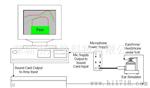
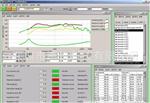
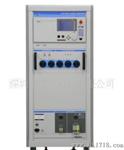
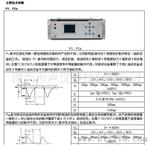
SoundCheck是以軟件為基礎(chǔ)的而功能強(qiáng)大的電聲和音頻電子測(cè)量系統(tǒng),是可以根據(jù)特定技術(shù)指標(biāo)為你量身定制。它具有多種數(shù)據(jù)采集選項(xiàng)和軟件模塊,并易于集成到生產(chǎn)和研發(fā)測(cè)試領(lǐng)域,是工程技術(shù)實(shí)驗(yàn)室和生產(chǎn)車間的理想測(cè)試系統(tǒng)。 請(qǐng)瀏覽以下頁(yè)面來了解如何使用SoundCheck來測(cè)試各種單一和多通道音頻設(shè)備。
SoundCheck概括:什么是SoundCheck,它是由什么組成的,以及如何設(shè)置以達(dá)到你的精密要求?
SoundCheck的研發(fā)應(yīng)用:是什么令SoundCheck成為音頻產(chǎn)品設(shè)計(jì)實(shí)驗(yàn)室的特定選用測(cè)試系統(tǒng)? 了解SoundCheck的度和功能,測(cè)試靈活性,和其他實(shí)驗(yàn)室設(shè)備的兼容性和先進(jìn)的撰寫功能。
SoundCheck生產(chǎn)線應(yīng)用:為什么那么多的跨國(guó)公司擁有多套SoundCheck軟件用于生產(chǎn)線上? 了解SoundCheck的速度,可靠性,抗噪性,生產(chǎn)線整合性和'數(shù)據(jù)庫(kù) 統(tǒng)計(jì)能力。
SoundCheck的性應(yīng)用:當(dāng)你在世界各地進(jìn)行測(cè)試標(biāo)準(zhǔn)化,SoundCheck 在哪些方面有別于其他產(chǎn)品?了解其語(yǔ)言選項(xiàng),共享程序,數(shù)據(jù)傳輸以及更多信息。
技術(shù)參數(shù):詳細(xì)的技術(shù)參數(shù)
特點(diǎn):有關(guān)SoundCheck的更先進(jìn)功能的詳細(xì)資料,例如虛擬設(shè)備和使用的算法
軟件套裝:關(guān)于SoundCheck的各同標(biāo)準(zhǔn)配置信息
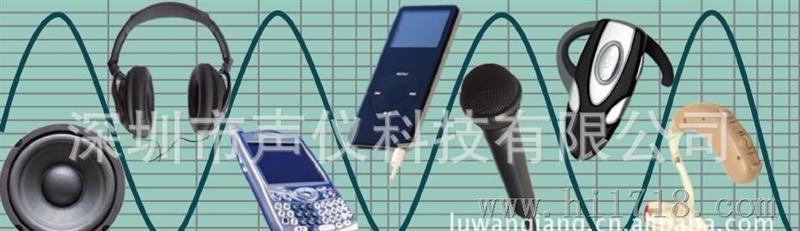
應(yīng)用設(shè)備:了解如何使用SoundCheck來測(cè)試揚(yáng)聲器,麥克風(fēng),助聽器,電話機(jī),耳機(jī),話筒,MP3播放器以及更多的音頻電子設(shè)備。
SoundCheck -完備的研發(fā)工作室
SoundCheck是目前市場(chǎng)上完善的音頻測(cè)試系統(tǒng)。 它具有的測(cè)量分析,后處理和統(tǒng)計(jì)能力比得上那些價(jià)格貴幾倍的硬件音頻分析儀。另外,SoundCheck不僅僅是音頻分析儀 – 它相當(dāng)于一個(gè)設(shè)備完善的研發(fā)工作室。它包含了實(shí)驗(yàn)室里可以找到的所有典型設(shè)備的軟件版本 - 頻譜分析儀,實(shí)時(shí)分析儀,信號(hào)發(fā)生器,萬(wàn)用表和示波器,因此你無(wú)須額外的硬件來進(jìn)行測(cè)試。
準(zhǔn)確和功能強(qiáng)大
前端的輸入設(shè)備,例如高端聲卡和National Instruments PCI/PXI-4461數(shù)據(jù)采集卡提供了可與昂貴的硬件測(cè)試系統(tǒng)相比擬的準(zhǔn)確性,同時(shí),該軟件特定的算法可以保證的測(cè)試結(jié)果和深度分析。 SoundCheck綜合發(fā)揮了電腦的計(jì)算機(jī)功能來達(dá)到快速的數(shù)據(jù)采集和分析。這些特點(diǎn),結(jié)合程序先進(jìn)的后處理性能,統(tǒng)計(jì)工具盒撰寫的選項(xiàng),令該系統(tǒng)成為設(shè)計(jì)處理的強(qiáng)有力的工具。
完全控制和靈活測(cè)試
SoundCheck是測(cè)試開發(fā)人員的夢(mèng)想。 你無(wú)需編程知識(shí)來寫復(fù)雜的測(cè)量程序,因?yàn)樗械臏y(cè)試是建立在通過直接點(diǎn)擊的圖形界面形成一系列的步驟的流程圖格式。用戶可以控制每個(gè)測(cè)試參數(shù),而所有的控制都可以同時(shí)在界面中顯示以達(dá)到快速測(cè)試修改和研制。測(cè)試步驟控制所有的功能,包括設(shè)定硬件參數(shù),校準(zhǔn),創(chuàng)建激勵(lì)值,采集,分析和保存數(shù)據(jù)及創(chuàng)建。
SoundCheck就像一個(gè)預(yù)編程步驟的綜合圖書館;每一步驟都可以修改,可以創(chuàng)建用戶自定義步驟及添加這些步驟到圖書館。整個(gè)測(cè)試程序是從單個(gè)的步驟,或從包含了幾個(gè)步驟的子程序中組合而來的,這樣,令建立和修改測(cè)試快而簡(jiǎn)單。Co這些測(cè)試程序是可以保存的,所以整個(gè)測(cè)試可以通過點(diǎn)擊鼠標(biāo),就完成了設(shè)立,分析到,產(chǎn)生結(jié)論和存檔。測(cè)試步驟,程序和子程序都可以被復(fù)制,修改,保存,導(dǎo)出和發(fā)送電子郵件。 既節(jié)省了時(shí)間,又提高了測(cè)試程序的可重復(fù)性。
兼容性
盡管SoundCheck是一個(gè)完全獨(dú)立的系統(tǒng),但它可以和任何品牌的輔助測(cè)試設(shè)備兼容,包括頭和軀干模擬器,仿真嘴和仿真耳,麥克風(fēng),功率放大器,電話測(cè)試接口,信號(hào)路由器等等。該系統(tǒng)同樣適用于你今后的測(cè)試需求 - 軟件會(huì)不斷升級(jí),附加的模塊會(huì)不斷增添新的功能,而且這些升級(jí)都會(huì)是簡(jiǎn)單和不昂貴的。
簡(jiǎn)潔和性價(jià)比高
讓你的筆記本電腦真正發(fā)揮作用! 如果你安裝SoundCheck系統(tǒng)在筆記本電腦上,你就能帶著具有音頻分析性能的實(shí)驗(yàn)室,而無(wú)需硬件設(shè)備輕松上路了。 該系統(tǒng)不僅性價(jià)比高,而且特別適用于緊急處理生產(chǎn)線上的問題。
先進(jìn)的撰寫功能
你可以通過導(dǎo)出數(shù)據(jù)自定義SoundCheck,或者輸出數(shù)據(jù)到Microsoft® Word或Excel之類的軟件包,或者如Microsoft Access, SQL或Oracle®之類的數(shù)據(jù)庫(kù)進(jìn)行存檔,后處理或撰寫。 SoundCheck 同樣可以通過使用National Instruments’ 的Test StandTM或Active X®等軟件跟大型的測(cè)試應(yīng)用程序想結(jié)合。
研發(fā)測(cè)試可以容易地轉(zhuǎn)化到生產(chǎn)線上
SoundCheck令生產(chǎn)線輕松地執(zhí)行跟研發(fā)實(shí)驗(yàn)室同樣的測(cè)試 - 這樣可以確保用戶聽到跟設(shè)計(jì)工程師的預(yù)期完全一樣的效果。 由于沒有昂貴和復(fù)雜的硬件設(shè)備,SoundCheck 的價(jià)格在生產(chǎn)應(yīng)用上是可承受的。它的速度很快并跟自動(dòng)化生產(chǎn)線整合在一起。 重要的是,它先進(jìn)的算法可以確保即使在高噪音的環(huán)境下測(cè)試結(jié)果仍然可靠。
同樣的測(cè)試程序可以根據(jù)研發(fā)用途和生產(chǎn)用途進(jìn)行不同的配置。 例如,一個(gè)研發(fā)測(cè)試可以允許操作員修改輸入?yún)?shù)并輸出一個(gè)全面細(xì)致的分析,而生產(chǎn)線版本則只允許預(yù)設(shè)定為“單擊”操作來輸出簡(jiǎn)單的“通過/失敗”結(jié)果給操作員,并將全面的測(cè)試結(jié)果寫到數(shù)據(jù)庫(kù)里。 因此,用戶可以為在公司內(nèi)部開發(fā)的測(cè)試,同時(shí)和他們的制造工廠或第三方供應(yīng)商共用該測(cè)試程序的生產(chǎn)線版本。這樣,無(wú)論在哪里生產(chǎn),都易于進(jìn)行質(zhì)量控制
SoundCheck -快速可靠的生產(chǎn)線測(cè)試
SoundCheck非常適用于生產(chǎn)線測(cè)試。 它具有先進(jìn)的算法,即使在高噪音的環(huán)境下,仍然可以進(jìn)行快速和可重復(fù)的測(cè)試,和自動(dòng)化生產(chǎn)線完全結(jié)合在一起。 它比人工測(cè)聽更可靠,比“堆架式”系統(tǒng)更簡(jiǎn)單和經(jīng)濟(jì)。 這一系列低預(yù)算的生產(chǎn)線軟件包提供了生產(chǎn)制造產(chǎn)業(yè)所需的功能,但成本明顯低于一套全面的研發(fā)系統(tǒng)。
快速
SoundCheck’先進(jìn)的算法實(shí)現(xiàn)了極其快速的測(cè)試。 例如: 它能夠在短短的一秒鐘內(nèi)執(zhí)行全面的傳感器分析 - 包括產(chǎn)生激勵(lì)信號(hào),測(cè)量所需的參數(shù),將結(jié)果和參考標(biāo)準(zhǔn)相比較,并以簡(jiǎn)單的“通過、失敗”信息來顯示測(cè)試結(jié)果。 多通道軟件和硬件選項(xiàng)可以達(dá)到同時(shí)測(cè)量多個(gè)系統(tǒng)參數(shù),以進(jìn)行快速測(cè)試多通道設(shè)備(如混合主板或環(huán)繞聲系統(tǒng))和批量測(cè)試。
可重復(fù)性
特殊設(shè)計(jì)的濾波器和分析算法可以分辨測(cè)試信號(hào)和背景噪音,從而提供了在嘈雜的生產(chǎn)制造環(huán)境下可重復(fù)的測(cè)試結(jié)果。此外,除了可以測(cè)量所有人工測(cè)聽出的錯(cuò)誤外(如摩擦音,松散粒子等),SoundCheck還能夠檢測(cè)和定量那些不被人工測(cè)聽所發(fā)現(xiàn)的錯(cuò)誤,如逆極性
容易使用
你可以設(shè)置測(cè)試為“點(diǎn)擊”或自動(dòng)化操作以生成“通過/失敗”結(jié)果,同時(shí),各種級(jí)別的密碼保護(hù)可以讓你控制誰(shuí)可以進(jìn)入和修改測(cè)試程序。 為了更簡(jiǎn)化生產(chǎn)測(cè)試,你可以選擇中文版,令海外的生產(chǎn)線員工或第三方供應(yīng)商明白屏幕上的指引。這些功能都被添加到系統(tǒng)中,提供簡(jiǎn)單,無(wú)差錯(cuò)的操作。
無(wú)停機(jī)時(shí)間
由于SoundCheck使用的硬件只是一臺(tái)電腦和一個(gè)的音頻聲卡 - 容易購(gòu)買,并且低維護(hù)成本,所以它基本上消除了測(cè)試系統(tǒng)的停機(jī)時(shí)間。 如果發(fā)生故障,你自己的員工就可以通過使用標(biāo)準(zhǔn)的現(xiàn)貨供應(yīng)配件來修復(fù)運(yùn)行。你也可以選擇通過互聯(lián)網(wǎng)獲得Listen 公司工程師的即時(shí)遠(yuǎn)程診斷。
和生產(chǎn)線相結(jié)合
SoundCheck和自動(dòng)化軟件相兼容,并通過使用RS-232, IEEE-488, 藍(lán)牙,F(xiàn)ireWire, USB 和 TTL i界面跟條形碼系統(tǒng),PLCs等硬件相連接。SoundCheckc可以通過LabVIEW 或其他支持ActiveX 命令(VB.NET, C#, C++, Java 等等),所以它和大部分的測(cè)試平臺(tái)相兼容。 所有的測(cè)試結(jié)果都會(huì)被記錄在Sound Check 里面,或者輸出到其他軟件來進(jìn)行統(tǒng)計(jì)程序控制。在生產(chǎn)自動(dòng)化當(dāng)中,你可以把測(cè)試設(shè)置為當(dāng)被測(cè)設(shè)備到位時(shí)開始,不及格的設(shè)備會(huì)被從生產(chǎn)線中自動(dòng)剔除。
數(shù)據(jù)庫(kù)和統(tǒng)計(jì)能力
你可以把測(cè)試設(shè)置為多數(shù)據(jù)輸出選項(xiàng)。 這些包括發(fā)送給生產(chǎn)線操作人員的通過比較參考標(biāo)準(zhǔn)值而產(chǎn)生的“通過/失敗”指示,自定義的SoundCheck,或發(fā)送到Microsoft® Access, SQL 或Oracle® 數(shù)據(jù)庫(kù)進(jìn)行存檔,數(shù)據(jù)開發(fā)采集或撰寫的完整的測(cè)試結(jié)果記錄。 SoundCheck 還具有廣泛的統(tǒng)計(jì)分析工具欄,包括了Gage R&R,值,小值,平均值,標(biāo)準(zhǔn)偏差,收益,Cpk和平均值。
SoundMap Technical Specifications
Version 1.0
Time View
- Input File Data format
- SoundCheck Waveform
- Wave file (*.wav)
- TIM: MLSSA binary file format for time data
- Text files (documented format)
- Display of time waveform + zoom
- Analysis Parameters
- Choice of the transform: STFT, CSD, WV, Wavelet (see algorithms)
- Frequency resolution: Hz (STFT, CSD, WV) or 1/3…1/24 octave (Wavelet).
- Frequency resolution (in Hz)
- Time increment (in s)
- WV Smoothing size (in s)
- Automatic / manual setup
- Information
- Sampling frequency (Hz)
- Transform Overlap (%)
- Window/Wavelet duration (s).
- BT product (%)
- Analysis duration (s)
- Analysis completeness ( “Gap Free”):
- Number of spectra, lines/spectra, time-frequency pixels
- Bar-graphs for windows size, smoothing size and analysis duration
Multispectrum View
- Time-frequency intensity map with color coded levels and 2 side displays.
- Intensity Map (time-frequency-level)
- Color coded levels
- Unit = calibrated power spectral density in dB(ref. 1 U²/Hz)
- Choice of color scales: Rainbow, Fire, Sunset, Grey Scale…
- Choice of Dynamic Range
- 2D Max search.
- 2 cross-cursors (one absolute, one delta)
- Right Side Display= Frequency Display
- Global Energy Spectrum (U².s/Hz)
- Instantaneous spectrum (U²/Hz)= frequency slice at time location of cursor 1.
- Partial spectrum (U².s/Hz) between the 2 vertical cursors on the map
- Group Delay curve(s)
- 2 horizontal cursors coupled with the ones on the map.
- Bottom Display= Time Display
- Time wave, analyzed segment (U)
- Time slice (U²/Hz). The time slice is done at frequency location of cursor 1.
- Energy time curve (U²)
- Partial Energy time curve (U²) between the 2 horizontal cursors on the map
- Instantaneous Frequency (Hz)
- 2 vertical cursors coupled with the cursors of the map
- Analysis Parameters and Informations + Bargraphs as in the analysis front panel
- PhysicalUnit U.
- Energy Display: Total or Partial (defined by cursors)
- Save/recall map file
- Save jpg/bmp images
3D view (Color Waterfall)
- Log/Lin freq axis
- Color scale or Surface
- Full choice of view angle
- 3D Cursor
- Save jpg/bmp images
Algorithms
Transforms:
- STFT: Short-Term Fourier Transform with Gaussian window.
- WV:Smoothed Pseudo Wigner-Ville Transform with 2 independent Gaussian windows. Implemented in analytical form.
- CSD: Cumulative Spectral Decay with Cosine-Tapered (Tukey) Window. Low frequency limit inverse of window duration.
- Wavelet: Gaussian Analytical wavelet (Morlet). Fractional octave bandwidth and center frequencies.
Multispectrum:
- Global Energy Spectrum†: power sum of all spectrum of the multispectrum.
- Sub-Total Spectrum†: sum of all spectrum of the multispectrum, between the 2 verticals cursors.
- Energy Calculus†: sum of all time-frequency values of the whole multispectrum for the total energy, or in the box delimited by the 2 cross-cursors, for the partial energy.
- Energy-Time Curve: sum of all time slices of the multispectrum.
- Partial Energy Time Curve: sum of all time slices of the multispectrum, between the 2 horizontals cursors.
- Group Delay Curve†: centroid of each time slice over frequency.
- Instantaneous Frequency Curve:centroid of each frequency slice over time.
Loudspeaker Testing
Applications of SoundCheck for Loudspeaker Testing Include:
| |
Industry Standard Loudspeaker Tests
|
System Overview
SoundCheck® is an easily configurable, Windows-based system for efficient and comprehensive measurement and testing of loudspeakers.
|
|
|
|
|
|
|
|
|
|
Production Testing
SoundCheck is a fast and accurate system for production line testing and loudspeaker QC. All quality-related parameters – both acoustical and electrical – are measured simultaneously, resulting in fast and thorough loudspeaker evaluation. SoundCheck’s unique stepped sine excitation signal (Stweep™) permits such detailed tests to be performed in as little as 3 seconds without sacrificing test accuracy, and its proprietary HarmonicTrak™ algorithm maintains measurement accuracy even in noisy environments.
The software can be configured for one-click access to commonly used tests, and various levels of operator control can be assigned to prevent modification of the test sequence. Results can be presented as a simple pass/fail indication, or a detailed failure mode analysis. Pass/Fail limits can be user-defined, determined by offsetting data from a measurement (e.g. ±3dB from the response curve of a reference loudspeaker), or determined statistically using SoundCheck’s statistical analysis module. Detailed results can be exported to other programs for additional processing, statistical control, and generating documents in standardized formats.
SoundCheck interfaces with barcode readers, footswitches, and other digital I/O devices such as TTL controlled relays, RS-232, and IEEE-488 to integrate fully with automatic production lines.
R&D Testing
SoundCheck is a powerful and flexible tool for the R&D laboratory. Its advanced measurement algorithms enable rapid characterization of prototypes, performing comprehensive tests such as frequency response, phase, sensitivity, distortion, directivity, impedance, and Thiele-Small parameters in a matter of seconds. SoundCheck is available with either a sound card or with National Instrument’s data acquisition cards for high precision measurements.
SoundCheck offers unrivalled flexibility at every stage in the test process. Input test signals include sine, noise, and any signal stored as a WAV file (e.g. multi-tone, impulse, tone burst, etc.). Customized test sequences are easily developed using SoundCheck’s unique point and click interface. SoundCheck can be easily incorporated into existing test programs that utilize ActiveX controls or National Instruments LabVIEW®.
Analysis tools include a FFT analyzer and an optional real time analyzer (RTA), which provides the R&D engineer with 1/1, 1/3, 1/6, 1/12, and 1/24 octave analysis. An optional analysis module enables the measurement of a loudspeaker’s free-field response and free-field harmonic distortion in a non-anechoic environment using a continuous logarithmic sine sweep. Soundcheck’s post-processing editor has many pre-programmed routines including Thiele-Small parameters, curve fitting to determine resonances, arithmetic operations, curve smoothing, and statistical functions. SoundCheck can also record the loudspeaker’s response as a WAV file for additional analysis.
Typical Loudspeaker Testing System Configuration
A typical loudspeaker test system consists of the SoundCheck Basic Software with optional Distortion, Post-Processing, Simulated Free-Field and Equation Editor modules, computer, sound card, audio amplifier, impedance box, microphone, and microphone power supply (options may vary depending upon application).
Features and Benefits
Same System for R&D and Production
Sample SoundCheck Report Sheet for a Loudspeaker Test |
With a common system for R&D and for the production line, it is easy for the tests developed by engineering to be performed on the production line. Identical virtual laboratories can be recreated around the world, making it easy for manufacturing to carry out the same tests as engineering, even if they are thousands of miles away.
Virtual Audio Test Bench
The SoundCheck software includes a virtual audio test bench. This includes a Signal Generator, Multimeter, Real Time Analyzer, Oscilloscope and Spectrum Analyzer. These virtual instruments provide exactly the same functionality as their expensive hardware equivalents, avoiding the need to purchase any additional stand-alone instrumentation.
One System, Many Options
SoundCheck is a modular system. Whether you want a basic sound card based system for production line testing of loudspeakers, or a sophisticated R&D system with National Instrument’s PXI-4461 dynamic signal acquisition module, for high accuracy laboratory measurements, we have a system to match your requirements and your budget.
麥克風(fēng)測(cè)試
Microphone Testing
Applications of SoundCheck for Microphone Testing Include:
| |
| |
Industry Standard Microphone Tests
|
Features and Benefitsof SoundCheck for Microphone Testing
Frequency Response
SoundCheck features a variety of test signals and analysis methods for measuring the frequency response of a microphone. The source speaker can be calibrated such that any stimulus signal is equalized to remove the influence of the speaker’s magnitude and phase response. SoundCheck’s stepped sine Stweep is the perfect choice for use in an anechoic chamber, test box, or for proximity tests. It can easily be optimized for the desired trade-off between accuracy and speed. For an extremely fast production test, use the Multitone stimulus, which plays a series of discrete frequencies simultaneously. You can even use an equalized speech or music WAV file as a stimulus and analyze the microphone’s response with the Transfer Function module.
Simulated Free-Field Response
Not everyone who wants to measure a microphone’s free field response has an anechoic chamber at their disposal. Typically the problem with measuring free field response in a non-anechoic room is the influence of room reflections on the measurement. With SoundCheck’s Time Selective Response algorithm these reflections can be time-windowed out, and the resulting frequency response is anechoic and accurate. A log sine sweep is used as the stimulus.The algorithm calculates the impulse response, and a user-defined time window is placed around it, eliminating the influence of room reflections.
Directional Characteristics
Measuring directionality is a key part of any microphone testing. With SoundCheck, a microphone can be tested at multiple angles, and the data can be displayed on a single graph. This angular data can also be used to calculate the Directivity Index curve versus frequency, as well as generate polar plots for discrete frequencies. SoundCheck can also automate the entire process of directivity measurements by directly communicating with a turntable via GPIB or RS-232.
Distortion
Most traditional audio analyzers are only capable of measuring one type of distortion, THD (total harmonic distortion). This measurement does not work for microphones, as the source speaker will almost always exhibit higher THD than the microphone under test. There is, however, another method. SoundCheck can measure the distortion of a microphone using an intermodulation distortion technique and two separate sound sources. One source is used to produce a fixed tone and the other is used to produce a sine sweep. In this way, the harmonic distortion of the sources is excluded from the measurement, and only the selected intermodulation components from the microphone are measured.
Typical Microphone Test System Configuration
A typical microphone test system consists of the SoundCheck Basic System that includes stepped-sine sweep (Stweep™) excitation, frequency/phase response, and a calibrated high-end sound card. Optional SoundWare modules include the Real Time Analyzer and polar plotting. Turnkey systems including computer, reference microphones, test chambers, and audio amplifiers are also available.
SoundCheck OptionsProduction: Expanded: R&D: | Associated Hardware
|
Headphone Testing
Applications of SoundCheck for Headphone Testing Include:
| |
| |
Industry Standard Headphone Tests
|
Features and Benefitsof SoundCheck for Headphone Testing
Production Testing
SoundCheck offers fast and accurate system production line testing. All acoustical and electrical quality-related parameters including frequency response, distortion, rub and buzz, polarity, impedance and sensitivity are measured simultaneously, resulting in fast and thorough headphone evaluation. SoundCheck’s unique stepped sine excitation signal (Stweep™) permits such detailed tests to be performed in as little as 3 seconds without sacrificing test accuracy, and its proprietary HarmonicTrak™ algorithm maintains measurement accuracy even in noisy environments.
The software can be configured for one-click access to commonly used tests, and various levels of operator control prevent modification of the test sequence. Results can be presented as a simple pass/fail indication, or a detailed failure mode analysis. Pass/Fail limits can be user-defined, determined by offsetting data from a measurement (e.g. ±3dB from the response curve of a reference headphone), or determined statistically using SoundCheck’s statistical analysis module. Detailed results can be exported to other programs such as Microsoft Excel® for additional processing, statistical control, and generating documents in standardized formats.
SoundCheck interfaces with barcode readers, footswitches, and other digital I/O devices such as TTL controlled relays, RS-232, and IEEE-488 to integrate fully with automatic production lines.
R&D Testing
SoundCheck is a powerful and flexible tool for the R&D laboratory. Its advanced measurement algorithms enable rapid characterization of prototypes, performing comprehensive tests such as frequency response, phase, sensitivity, distortion, and impedance in a matter of seconds. SoundCheck is available with either a sound card or with National Instrument’s data acquisition cards for high precision measurements.
SoundCheck offers unrivalled flexibility at every stage in the test process. Input test signals include sine, noise, and any signal stored as a WAV file (e.g. multi-tone, impulse, tone burst, etc.).
In addition, amplitude sweeps can be generated using SoundCheck’s Stimulus Editor to study compression effects and determine maximum SPL. Customized test sequences are easily developed using SoundCheck’s unique point and click interface. SoundCheck can be easily incorporated into existing test programs that utilize ActiveX controls or National Instruments LabVIEW®.
Analysis tools include a FFT analyzer and optional real time analyzer (RTA), which provides the R&D engineer with 1/1, 1/3, 1/6, 1/12, and 1/24 octave analysis. An optional analysis module enables the measurement of a headphone’s free-field response and free-field harmonic distortion in a non-anechoic environment using a continuous logarithmic sine sweep. Soundcheck’s post-processing editor has many pre-programmed routines including Thiele-Small parameters, curve fitting to determine resonances, arithmetic operations to determine the difference between left and right earphone (including phase), diffuse field and free-field corrections, curve smoothing, and statistical functions. SoundCheck can also record the headphone’s response as a WAV file for additional analysis.
Features and Benefits
Same System for R&D and Production
With a common system for R&D and for the production line, it is easy for the tests developed by engineering to be performed on the production line. This makes it easy for manufacturing to carry out the same tests as engineering, even if they are thousands of miles away.
Virtual Audio Test Bench
The SoundCheck software includes a virtual audio test bench. This includes a Signal Generator, Multimeter, Real Time Analyzer, Oscilloscope and Spectrum Analyzer. These virtual instruments pro-vide exactly the same functionality as their expen-sive hardware equivalents, avoiding the need to purchase any additional stand-alone instrumentation.
One System, Many Options
SoundCheck is a modular system. Whether you want a basic sound card based system for production line testing of headphones, or a sophisticated R&D system with National Instrument’s PXI-4461 dynamic signal acquisition module, for high accuracy lab-oratory measurements, we have a system to match your requirements and your budget.
Typical Headphone Test System Configuration
A typical headphone test system consists of the SoundCheck Basic Software with optional distortion test module, computer, sound card, audio amplifier, artificial ear or test head, and microphone power supply for each ear (options may vary depending upon application).
Headset Testing
Applications of SoundCheck for Headset Testing Include:
- Analog wired headsets
- USB headsets
- Bluetooth headsets
- Stereo or Mono
Industry Standard Headset Tests
- Frequency response
- Sensitivity
- Phase
- Self-noise and signal-to-noise
- Distortion
- Max SPL
- Loudness Ratings
- Send sensitivity in a diffuse field
- Directional characteristics (polar plot)
- TIA 810/920
Features and Benefits of SoundCheck for Headset Testing
Frequency Response
SoundCheck features a variety of test signals and analysis methods for measuring the frequency response of both the receiver (speaker) and microphone path in a headset. A stepped sine sweep is ideal for simple analog headsets with minimal audio signal processing, and simple digital headsets with stable latency. More advanced methods are necessary to test complex headsets or headset systems, because they do not react in a normal way to stepped sine signals. One example is a headset with substantial signal processing, such as a compressor, expander, etc. Other examples are digital devices, like Bluetooth headsets, that are prone to dropouts and latency shifts. These more complex headsets necessitate the use of broadband stimuli like noise, speech, or simulated speech (i.e. ITU-T P.50). SoundCheck features the ability to use any WAV file as a stimulus, giving you the flexibility to choose your own source signal. These stimuli can even be corrected by a calibrated equalization curve when using a mouth simulator as the output source.
Digital Communication
SoundCheck can communicate with any device that appears in the list of Windows audio devices. This means that testing a Bluetooth or USB headset is as easy as connecting it to a PC and selecting it from a list in SoundCheck. No external digital interface is required! A standard Listen-recommended soundcard is used for sending signals to a mouth simulator and receiving the signals from an ear simulator. All of the audio to and from the headset is handled directly in the SoundCheck test sequence.
Distortion
Measuring distortion is a key part of any headset testing. Typically the receive transducer is tested for Total Harmonic Distortion and possibly Rub & Buzz. SoundCheck’s HarmonicTrak algorithm accomplishes both of these, as well as generating a frequency response, from a single acquired waveform. The user has the option to select exactly which harmonics are analyzed, and a plot of distortion versus frequency is created. A multitone stimulus can be used to test devices that do not work well with sine waves (e.g. Bluetooth headsets). The multitone analysis can also output a non-coherent distortion plot. While this measurement is not identical to THD, it can be an effective metric for analyzing a device’s real-world performance. Another option is to use pulsed-noise distortion measurements, recently described in IEEE 269.
Conformance to Standards
Some customers may have the desire or requirement to test their products according to an international standard. Listen offers two suites of test sequences for performing these measurements on headsets: TIA 810-B and TIA 920. Purchasing these sequence bundles saves a significant amount of test development time and is a great enhancement for an R&D system.
Typical Headset Test System Configuration
Coming Soon
Caption Coming soon too!
SoundCheck OptionsProduction: Expanded: R&D: | Associated HardwareReference Microphone |